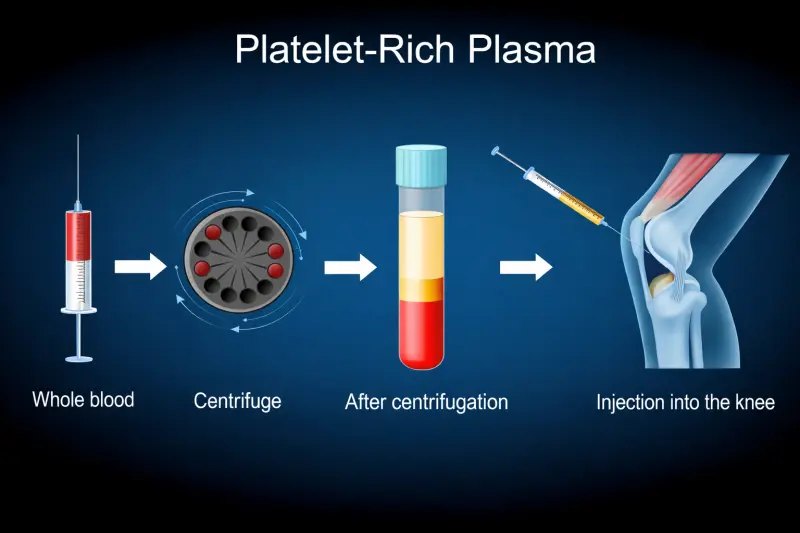
Platelet-Rich Plasma (PRP) therapy is a regenerative treatment that involves concentrating platelets from your own blood and injecting them into the injured or degenerative area. Platelets contain growth factors that help:
- Stimulate tissue repair
- Enhance collagen production
- Improve blood supply to damaged tissues
- Reduce inflammatory processes
Unlike treatments that only suppress symptoms, PRP aims to support biological healing at the source of injury.
The process involves:
-
Drawing a small sample of your blood
-
Processing it in a centrifuge to separate platelet-rich plasma
-
Injecting the concentrated PRP into the targeted area under image guidance
Once injected, PRP releases growth factors that initiate and accelerate tissue healing.
This makes PRP particularly useful in chronic tendon injuries and early joint degeneration.
PRP injections are frequently used for:
Joint Conditions
-
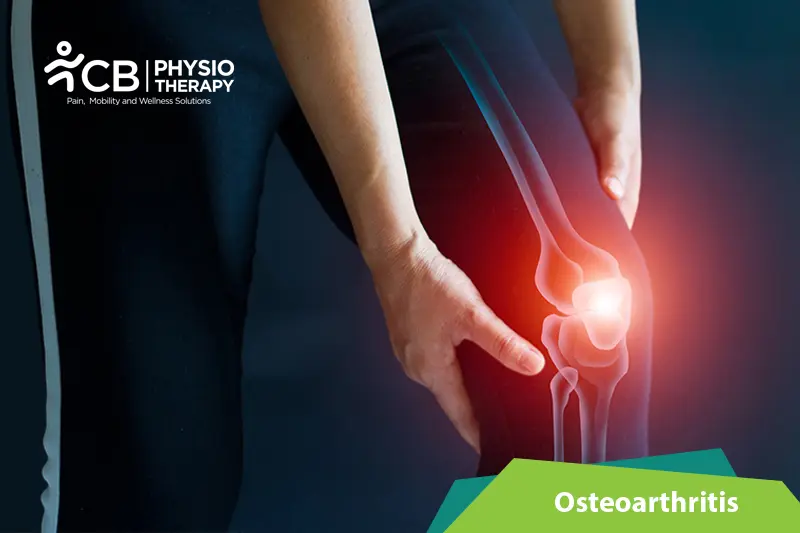
Early degenerative joint changes
Tendon & Ligament Injuries
-
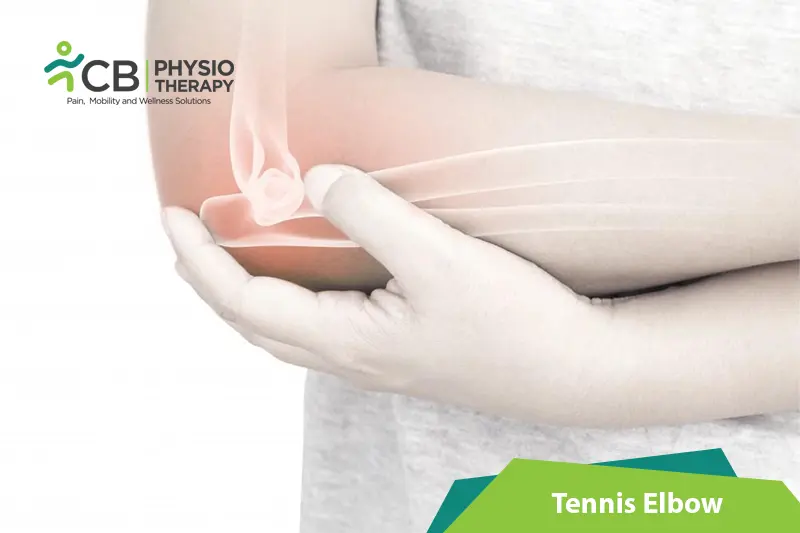
Tennis elbow (lateral epicondylitis)
-
Rotator cuff tendinopathy
-
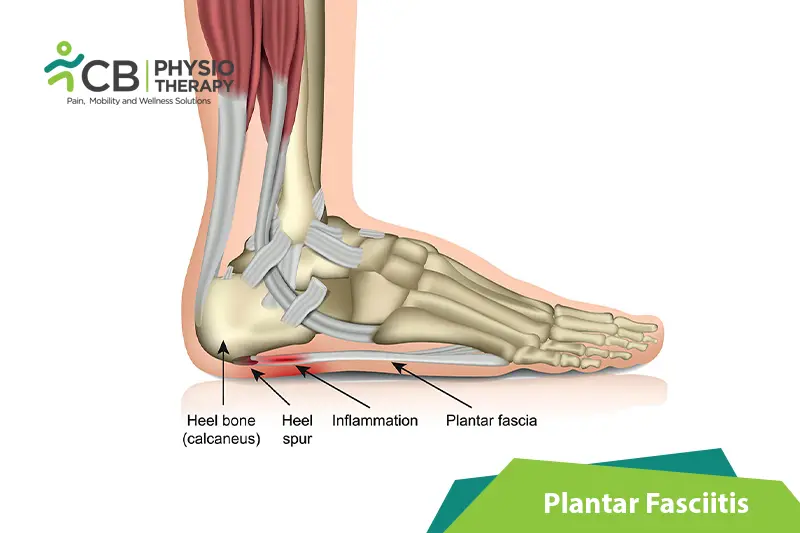
Plantar fasciitis (heel pain)
-
Ligament sprains
-
Chronic tendonitis
PRP is often considered when pain persists despite physiotherapy and medication.
PRP provides a regenerative approach to musculoskeletal pain management.
-
Uses your own blood components
-
Minimally invasive procedure
-
Low risk of allergic reaction
-
Targets tissue repair, not just pain relief
-
May slow the progression of early degenerative changes
-
Can be combined with physiotherapy for optimal outcomes
-
Performed as a day-care procedure
Because PRP is prepared from your own blood, the risk of rejection or allergic reaction is minimal.
Temporary effects may include:
-
Mild soreness at injection site
-
Local swelling
-
Temporary stiffness
Proper patient selection and image-guided injection improve safety and precision.
The number of sessions depends on:
-
Severity of tissue damage
-
Chronicity of condition
-
Individual healing response
Typically:
-
1 to 3 sessions may be recommended
-
Sessions are spaced several weeks apart
Your treatment plan is individualized based on clinical evaluation.
PRP may be suitable if:
-
You have chronic tendon or joint pain
-
Early arthritis is present
-
Conservative therapy has not provided adequate improvement
-
You prefer a non-surgical regenerative option
A proper assessment is essential to determine whether PRP is appropriate for your condition.
PRP enhances tissue healing.
Physiotherapy restores strength and movement.
When integrated properly:
-
Healing tissue adapts better to loading
-
Muscle strength improves
-
Joint stability increases
-
Long-term outcomes improve
-
Risk of recurrence decreases
This combined approach supports both biological repair and functional recovery.