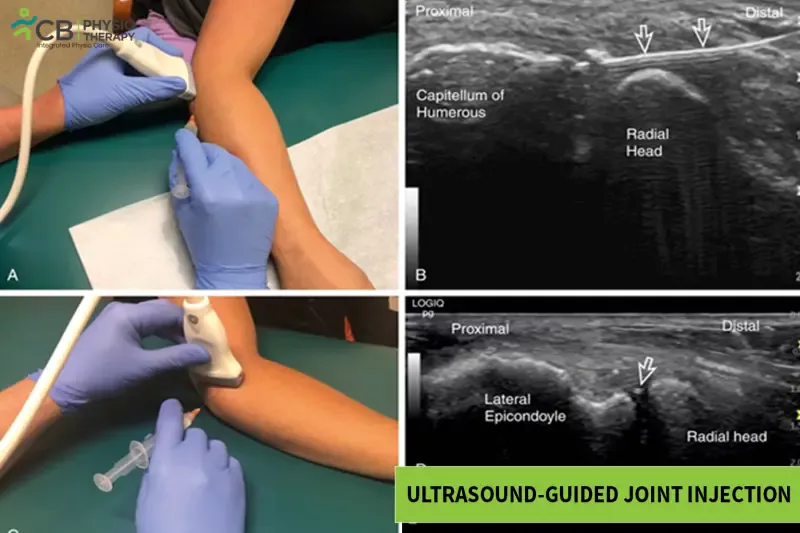
An ultrasound-guided joint injection is a minimally invasive procedure in which medication is injected directly into a joint space using real-time ultrasound imaging for precise needle placement. Ultrasound allows the doctor to see clearly:
- The joint space
- Surrounding ligaments and tendons
- Fluid collection
- Needle position in real time
This improves accuracy, safety, and effectiveness compared to blind injections.
Usually, one or more of the following are injected:
1. Local Anesthetic
Purpose:
- Provides immediate pain relief
- Confirms the joint as the pain source (diagnostic value)
- Reduces discomfort during procedure
2. Corticosteroid
Purpose:
- Reduces inflammation inside the joint
- Decreases swelling
- Provides longer-lasting pain relief
3. Hyaluronic Acid (In selected cases, especially OA knee)
Purpose:
- Improves joint lubrication
- Enhances shock absorption
- Reduces friction
- Improves mobility
4. Platelet-Rich Plasma (PRP) (Selected cases)
Purpose:
- Promotes tissue healing
- Supports cartilage health
- Reduces chronic inflammation
The anesthetic works immediately. Steroid effect typically begins within 24–72 hours. Hyaluronic acid and PRP may take a few weeks for optimal benefit.
To achieve both immediate and sustained relief:
- Immediate pain reduction (anesthetic)
- Long-term inflammation control (steroid)
- Confirms intra-articular source of pain
- Breaks the inflammation-pain cycle
The injection works by delivering medication directly into the inflamed joint.
- Reduces intra-articular inflammation
- Decreases synovial swelling
- Blocks pain mediators
- Improves joint lubrication (if HA used)
- Enhances mobility
- Facilitates rehabilitation
Because it is ultrasound-guided, medication is placed precisely inside the joint cavity for maximum effectiveness.
EXACT PROCEDURE (STEP-BY-STEP)
Ultrasound-guided joint injection is an outpatient procedure performed under sterile precautions.
- Patient positioned comfortably
- Ultrasound probe placed over joint
- Joint space visualized in real time
- Skin cleaned and sterilized
- Local anesthetic applied (if required)
- Needle inserted under ultrasound guidance
- Medication injected into joint space
- Needle removed and sterile dressing applied
Procedure time: 10–20 minutes
Observation time: 15–30 minutes
Same-day discharge
This is what the patient experiences during and after the treatment:
During Procedure:
- Mild needle prick
- Pressure sensation inside joint
- Minimal discomfort due to ultrasound accuracy
After Procedure:
- Temporary soreness (1–2 days possible)
- Immediate relief if anesthetic used
- Steroid effect begins in 1–3 days
- Reduced swelling and improved movement
Most patients tolerate the procedure very well.
The number of sessions required depends on:
- Type of condition
- Severity of degeneration
- Type of medication used
- Clinical response
- Steroid injections: Usually single injection, may repeat after several weeks if needed
- Hyaluronic acid: Often given as a series (1–3 injections)
- PRP: Usually 1–3 sessions spaced weeks apart
Treatment is based on functional improvement and pain relief.
Yes, when performed by a trained specialist under sterile technique.
Advantages of Ultrasound Guidance:
- Higher accuracy
- Reduced risk of damage to nearby structures
- Lower complication rate
- Temporary pain flare
- Mild swelling
- Bruising
- Temporary numbness
Serious complications (like infection or bleeding) are very rare.
Main goal: To reduce inflammation and restore joint function.
- Reduces joint pain
- Decreases swelling
- Improves range of motion
- Enhances functional ability
- Delays need for surgery (in selected cases)
- Facilitates physiotherapy participation
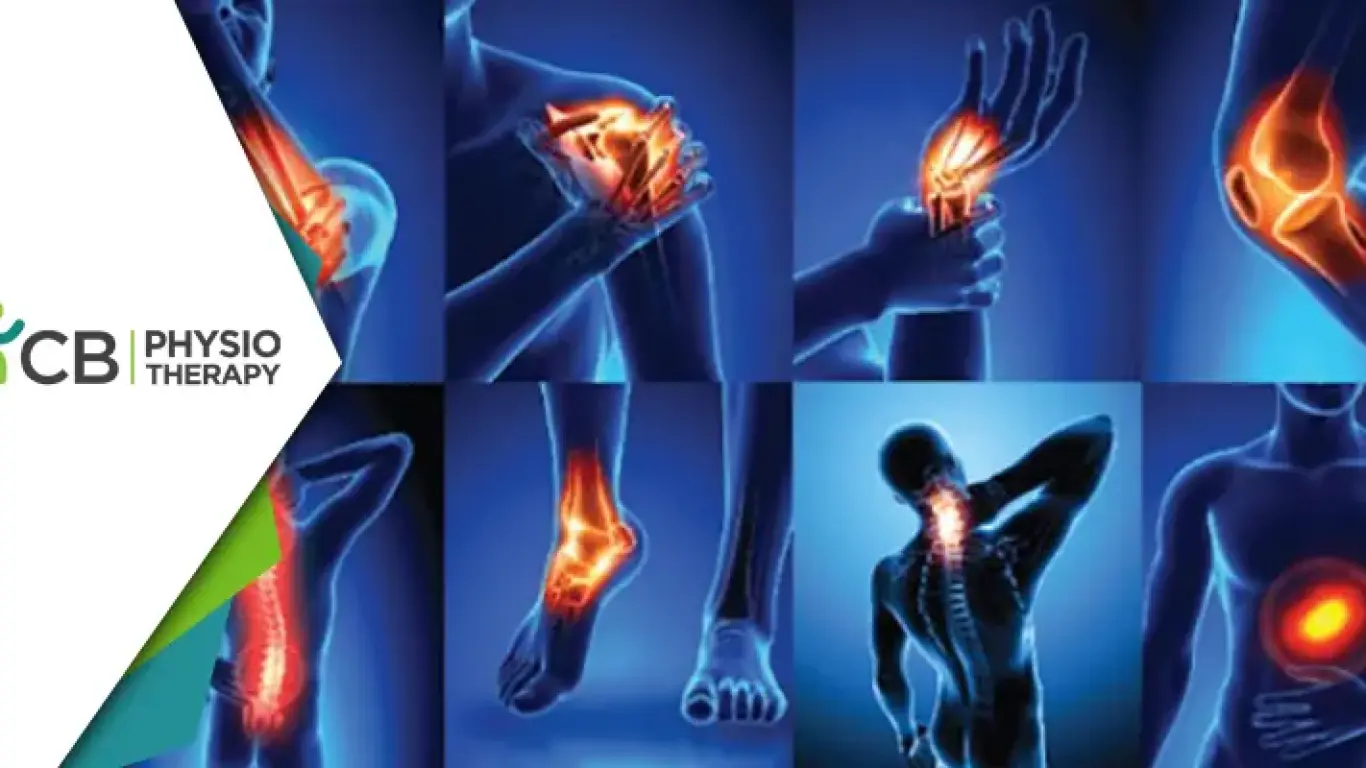
Joint injections are used for inflammatory and degenerative joint conditions such as:
Osteoarthritis (knee, shoulder, hip, ankle)
- Rheumatoid arthritis
- Frozen shoulder
- Joint effusion (fluid accumulation)
- Post-traumatic joint pain
- Synovitis
- Labral or cartilage irritation
- Knee
- Shoulder
- Hip
- Ankle
- Elbow
- Wrist
Although generally safe, certain conditions require caution.
Absolute:
- Active infection at injection site
- Septic arthritis
- Uncontrolled bleeding disorder
- Allergy to injected medication
- No patient consent
- Uncontrolled diabetes (if steroid is used)
- Pregnancy
- Anticoagulant therapy
- Severe systemic illness
Pain relief from injection creates an opportunity to correct the underlying mechanical cause through rehabilitation.
Injection reduces pain — but does not correct:
- Muscle weakness
- Joint instability
- Poor biomechanics
- Movement compensations
- Degenerative progression
- After pain relief, physiotherapy helps to:
- Strengthen supporting muscles
- Improve joint stability
- Restore mobility
- Correct posture and alignment
- Prevent recurrence
- Maximize long-term outcomes